Non-National: 1,500,000Ug Shs / ($ 403)
Excavator Training at Machinery Training Uganda provides comprehensive instruction on how to operate excavators safely and efficiently. Our experienced trainers focus on essential skills, including digging techniques, safety measures, and equipment maintenance. This course is ideal for those looking to advance in the construction and earth-moving industries. You will engage in practical exercises that enhance your understanding of excavator mechanics, enabling you to tackle various tasks with precision. Join our program and position yourself as a skilled operator ready to meet the demands of today’s job market with confidence.
In this excavator training course, you will learn how to inspect and operate an excavator according to the manufacturer’s specifications and worksite requirements. At our excavator training school, we’re here to help you dig, scoop, and lift your way to a successful career as an excavator operator. With our comprehensive excavator training program, you’ll gain the knowledge, skills, and confidence you need to operate these mighty machines safely and efficiently.
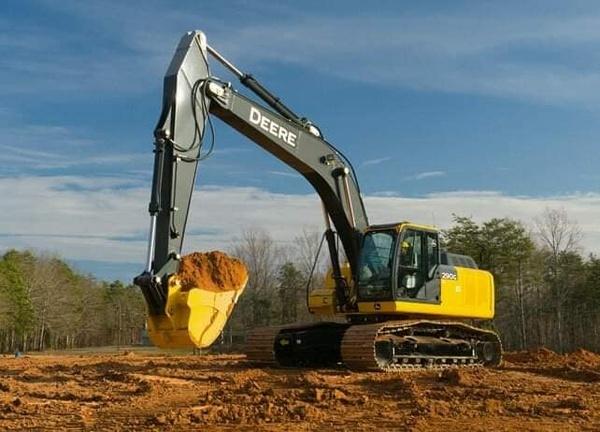
Excavators (hydraulic) are heavy construction equipment consisting of a boom, dipper (or stick), bucket and cab on a rotating platform known as the "house".
- The house sits atop an undercarriage with tracks or wheels. They are a natural progression from the steam shovels and are often mistakenly called power shovels.
- All movement and functions of a hydraulic excavator are accomplished through the use of hydraulic fluid, with hydraulic cylinders and hydraulic motors.
- Due to the linear actuation of hydraulic cylinders, their mode of operation is fundamentally different from cable-operated excavators which use winches and steel ropes to accomplish the movements. Excavators are also called diggers, mechanical shovels, or 360-degree excavators (sometimes abbreviated simply to "360").
- Tracked excavators are sometimes called "trackhoes" by analogy to the backhoes In the UK, wheeled excavators are sometimes known as "rubber ducks. Excavators are used in many ways Digging of trenches, holes, foundations Material handling Brush cutting with a hydraulic saw and mower attachments Forestry work Forestry mulching Construction Demolition with hydraulic claw, cutter, and breaker attachments General grading/landscaping Mining, especially, but not only open-pit mining River dredging Driving piles, in conjunction with a pile driver Drilling shafts for footings and rock blasting, by use of an auger or hydraulic drill attachment Snow removal with snowplow and snow blower attachments, but we do also offer this training course.
- Introduction
- What is an excavator?
- Most common excavator types (crawler, wheeled, mini-excavators, etc.)
- Excavator Function in construction and excavation projects.
2. Excavator components
- Understanding components to check daily during the pre-start or pre-operating checks.
- Functions and importance of each part (e.g., boom, bucket, tracks).
3. Excavator controls
- Familiarity with the different controls and their functions.
4. Excavator checks
- Walk Around Checks
- Pre-starting Checks
- Pre-operating Checks
5. General Excavator Safety
- Site Safety Regulations and Protocols.
- Hazards Identification or Risk Zones
- Personal Protective Equipment (PPE) for excavator operators.
6. Excavator Operating Techniques
- Pivot turn, Backhoe operation, Spin or Spot Turn, Ditching Operation.
- Loading Haul Trucks
- Excavating, digging, and trenching techniques.
- Loading and dumping materials.
- Grading and leveling with an excavator.
7. Transporting the Excavator
- Transporting excavator to and from the site.
- Methods of loading an excavator for transport
8. Professional Operator's attitude
- Obeying all site rules
- Being a team player
- Being able to communicate
- Being able to identify and solve problems
- Having the correct and positive attitude